
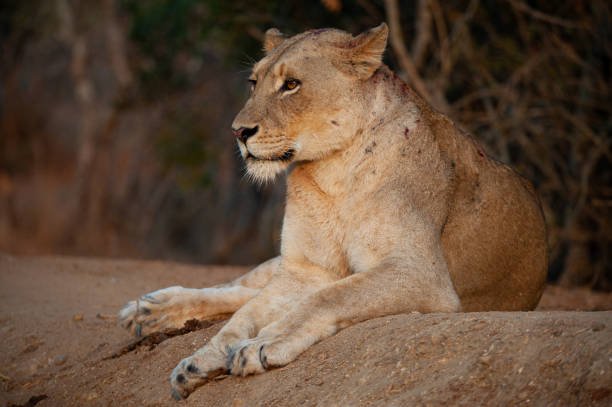
A Lioness seen on a safari in South Africa
The lioness cast plays a pivotal role in the survival and organization of lion prides. Female lions are central to the hunting, nurturing, and social cohesion of their groups. Their cooperative behavior, strategic thinking, and leadership within the pride ensure the long-term success of the species.
Understanding the lioness cast provides insight into the intricate social systems and adaptive strategies that characterize one of nature’s most iconic predators. These roles highlight the intelligence, strength, and versatility of female lions in maintaining both pride stability and ecological balance.
Introduction To Lioness Cast And Roles
In a lion pride, the lioness cast constitutes the majority of the group and is primarily responsible for sustaining the pride’s daily needs. Unlike male lions, whose principal function is territorial defense, female lions undertake hunting, cub-rearing, and maintenance of social structure.
The lioness cast demonstrates remarkable cooperation. Each member contributes according to her experience, age, and physical ability, which ensures effective hunting, protection, and training of the young.
This division of labor is a key factor in the pride’s survival and ecological efficiency, reflecting the critical role of female lions in their natural habitats.
Hunting Skills And Group Strategies
The hunting behavior of a lioness cast is methodical, highly coordinated, and strategic. Female lions often hunt in groups to increase efficiency and success, targeting prey larger than what a single lioness could handle.
By utilizing stealth, patience, and precise timing, the lioness cast maximizes their hunting success, ensuring sufficient food supply for the pride. This cooperative hunting behavior also fosters strong social bonds among females.
Coordinated stalking and ambush
Silent and patient approaches
Sprint bursts during attack
Role division among hunters
Efficient sharing of prey
Leadership Within The Pride
Leadership in a lioness cast is often assumed by the most experienced and mature females. These individuals guide hunting activities, oversee cub development, and mediate social interactions.
The authority of these lionesses is earned through practical experience and demonstrated skill rather than physical dominance. Their guidance ensures that younger members learn essential survival skills and social norms.
Strategic decision-making during hunts
Mentorship of junior females
Organization during territorial defense
Resource allocation among pride members
Maintaining group cohesion
This leadership structure emphasizes the importance of knowledge, experience, and cooperation within the lioness cast.
Raising Cubs And Social Dynamics
The lioness cast exhibits a communal approach to cub-rearing. Multiple females participate in nurturing, protecting, and teaching young lions essential survival techniques.
Such cooperation ensures that even if a cub’s mother is unavailable, it receives care and guidance from other females. This shared responsibility strengthens social cohesion and increases cub survival rates.
Protecting Young Cubs
Lionesses vigilantly guard cubs against predators, rival males, and environmental threats. Their protective behavior is essential for the continuation of the pride.
Teaching Survival Skills
Through observation and active demonstration, young lions learn hunting, stalking, and social behaviors from experienced females.
Social Integration
Cubs understand pride hierarchy and communication norms by interacting with multiple adult lionesses.
Resource Sharing
Food is distributed fairly among cubs, ensuring nourishment for all, regardless of maternal lineage.
Territorial Behavior And Defense
While male lions often focus on defending the pride’s territory, female lions contribute significantly to immediate defense efforts. Lionesses patrol the boundaries and respond to intrusions, particularly when cubs are vulnerable.
This division of labor strengthens pride security and ensures coordinated defense strategies against rival lions or other predators.
Communication Within The Cast
The lioness cast relies on a complex system of vocalizations, body language, and scent markings to coordinate activities and maintain social order.
Signals such as growls, roars, tail movements, and rubbing behaviors convey intent, warnings, or social cues, facilitating cooperation during hunting and daily activities.
Effective communication reinforces cohesion, allowing the lioness cast to function efficiently as a unit.
Interaction With Male Lions
Although lionesses handle the majority of hunting and cub care, male lions play a complementary role by defending territory and providing protection against rival prides.
This collaborative structure allows females to focus on resource acquisition and nurturing, while males contribute to long-term safety and territorial stability.
Adaptation And Environmental Awareness
The lioness cast exhibits remarkable adaptability to various environmental conditions, including savannahs, grasslands, and semi-arid regions.
Female lions modify hunting techniques, group behavior, and movement patterns according to prey availability and climatic conditions. Their strategic thinking and social cooperation make them apex predators capable of thriving in dynamic ecosystems.
Conclusion
The lioness cast exemplifies the strength, intelligence, and social sophistication of female lions in the wild. Their cooperative hunting, leadership, and cub-rearing responsibilities are vital for the survival and prosperity of the pride.
By observing a lioness cast, one gains a deeper appreciation of their strategic abilities, social cohesion, and adaptability. These remarkable animals highlight the balance of strength, teamwork, and ecological awareness in the natural world.
Frequently Asked Questions
1. What is a lioness cast?
A lioness cast is the group of female lions in a pride responsible for hunting, nurturing cubs, and maintaining social structure.
2. Who leads the lioness cast?
Older and more experienced females guide hunts, train cubs, and maintain group cohesion.
3. Why do lionesses hunt together?
Group hunting improves success rates, allows capture of larger prey, and reinforces social bonds.
4. How do lionesses raise cubs?
Cubs are cared for collectively by multiple females, who protect and teach essential survival skills.
5. What is the role of male lions in relation to the lioness cast?
Males primarily defend territory and provide protection, while females handle hunting and nurturing.
About the Author